Everything You Need to Know About CMHC Multi-Family Mortgages in Canada
How to qualify, what lenders look for, and how to prepare your project for CMHC or MLI Select financing.
This post was written in partnership with Foundry Mortgage Capital Corp., a trusted expert in CMHC financing across Canada.

Why This Matters
Accessing commercial mortgage financing for a multi-family project in Canada can feel like decoding a new language. Terms like DSCR, CMB spreads, or points-based qualification appear in every conversation, yet few borrowers start with a clear picture of how they all connect.
The Canada Mortgage and Housing Corporation (CMHC) offers programs that can dramatically improve your project’s economics, but only if you understand how to position yourself before you apply.
This guide walks you through how the two main programs work, how lenders measure eligibility, and what you should prepare before your first call with a commercial advisor.
Unlike other brokers or banks, we are transparent with the process and passionately educative so that you don’t waste time or brain cells ruminating on where you stand - everyone is better for it!
The following is directly inspired by the last year of educational conversations with clients and our internal teams. We reviewed all our Zoom call recording notes and combed through all the recent updates to give you the fine details that most of the time, you won’t find out until you’re deeply entrenched in the process. The further along you are, the more expensive things get so make sure you ask the hard questions up front to us and to yourself.
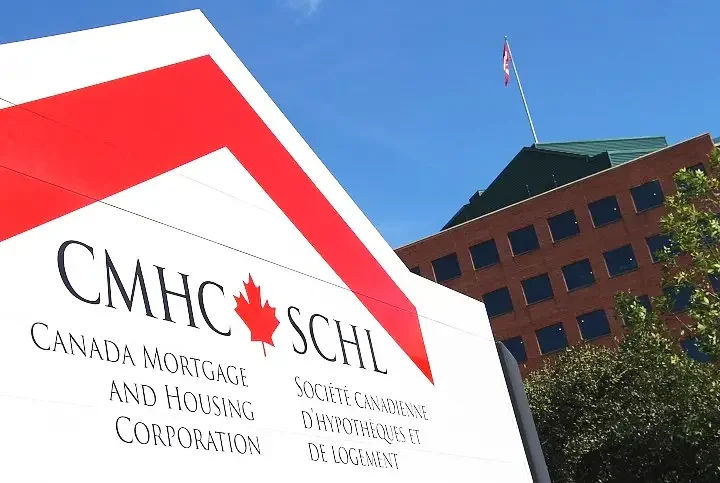
CMHC-Insured Financing: The Foundation
CMHC insures loans advanced by approved lenders. That insurance reduces the lender’s risk, allowing them to offer*
Higher leverage: up to 85% Loan-to-Value (LTV) as determined by CMHC under the conventional program and 95% LTV under MLI Select - meaning 15% and 5% down payment required minimum, respectively. Home value is determined by CMHC’s internal underwriting with support of the appraisal you order.
Without CMHC, you’re typically stuck with larger down payments and lower loan amounts between 65%-80% LTV.
Longer amortizations: Up to 40–50 years total mortgage lifespans as opposed to 25-30 years. The longer the lifespan, the lower the monthly payments, the more cash flow you will conserve.
Lower interest rates than uninsured construction or normal conventional debt.
On rare occasions, CMHC does direct lending as well but in general, that is restricted only for non-profit housing, specific affordable rental construction projects, and social housing initiatives.
Think of CMHC as the safety net that gives lenders confidence to finance housing projects at scale.
Two Of The Programs: Conventional vs. MLI Select
The Conventional Program
This is the standard option for stabilized rental buildings. It supports purchases, refinances, and construction take-outs once a project has predictable income.
Maximum LTV: ≈ 85% of appraised value or total project cost (the lesser value). Project costs include the purchase soft costs (professional services and architects), hard material costs, and land acquisition.
Debt Service Coverage Ratio (DSCR): For 7+ units over 1.20 for 10-year terms and 1.30 for 5-year terms. In short, DSCR measures how well your profit services (pays off) the debt you have. See the next section where we define DSCR.
Amortization: Up to 40 years (subject to economic life) and 50 years for new construction. A project is considered new construction for two years from receiving the occupancy permit.
Interest Rates:
Commercial mortgage rates are built on the 5 or 10-year Canadian Mortgage Bond (CMB) yield plus a small lender percentage spread above the CMB yield, which changes with market conditions and deal size. As a borrower, expect spreads typically in the 50–100 basis-point range (.50%-1.00%); but always confirm with your mortgage broker, as pricing moves daily.
Making Sense of the Numbers
Debt Service Coverage Ratio (DSCR)
At its core, CMHC wants assurance that your property’s income can comfortably support its loan obligations. The key measure is the Debt Service Coverage Ratio (DSCR), calculated as:
DSCR = Net Operating Income ÷ Annual Debt Service
In this context, “Annual Debt Service” represents the total of all principal and interest payments due on the mortgage over a 12-month period. It does not include property taxes, insurance, replacement reserves, management fees, or other operating expenses as those are already deducted when calculating Net Operating Income (NOI).
In other words, if your project’s DSCR is 1.20, it means the property generates $1.20 in net operating income for every $1 of annual loan payment. If that ratio falls below the program minimum, lenders may require additional equity, a longer amortization to reduce payments, or higher stabilized rents to bring coverage back in line.
Liquidity and Net Worth
To show financial resilience, borrowers must prove net worth ≥ 25 % of the loan amount (minimum $100,000 net worth). Liquid assets can include cash, marketable securities, or real-estate equity (excluding raw land). For a $16 million loan, that means ≈ $4 million combined net worth and liquidity is required amongst your team. Note that the liquidity requirement changes for construction mortgages as lenders want to see 35% liquidity outside of the property being funded.
Experience and Management
CMHC expects at least five years of multi-unit ownership or management experience. New developers can qualify by engaging a professional property management firm under contract or having a Co-GP partner with the aforementioned track record and experience.
Recourse and Guarantees
When a lender issues a CMHC-insured commercial mortgage, they typically require the borrower and related corporate guarantors (>10% ownership) to personally guarantee the loan. This protects the lender in situations where the property’s cash flow has not yet been proven.
During construction or while the building is still leasing-up, the project is considered unstabilized. In this stage, CMHC requires full recourse, meaning the borrower must provide a 100% personal or corporate guarantee for the entire outstanding loan amount (even if you have over 100 points). This stays in place until the building has reached its projected rents and maintained them for 12 consecutive months.
Once the property is stabilized and performing as underwritten, the guarantee requirement typically reduces to 40% of the outstanding loan balance, still assuming you have scored 100 points with CMHC. The remaining exposure is secured by the property itself and CMHC’s insurance.
There are only two scenarios where a project may qualify for limited recourse, where the lender’s claim is restricted primarily to the property and its secured assets (except in cases of fraud or environmental liability):
The loan-to-value (LTV) ratio is 65% or lower,
orThe project earns at least 100 points under MLI Select (i.e., exceptional affordability, energy efficiency, and accessibility outcomes).
Limited recourse does not mean no responsibility; it simply limits the lender’s recovery rights if a default occurs.
Designing Projects That Qualify
CMHC’s programs don’t just insure buildings; they reward better buildings. Here’s how each pillar contributes to both eligibility and long-term performance:
Energy Efficiency
High-performance envelopes, heat pumps, solar arrays, and triple-glazed windows reduce operating costs and boost DSCR. They also earn points toward lower premiums and longer amortizations.
Affordability
Committing 10–25% of units to moderate rents may seem restrictive, but it often unlocks tens of basis points in rate savings and increases leverage by ~10%. A 10-year affordability period is the minimum; a 20-year affordability period earns bonus points.
Accessibility
Adding zero-step entries, elevators, and adaptable bathrooms makes your property future-proof and broadens tenant appeal. It’s also the easiest category for many developers to gain 20–30 points without a major cost impact.
The MLI Select Program
MLI Select was introduced to reward projects that create social and environmental benefits.
It supports purchases, refinances, and construction take-outs once a project has predictable income.
Maximum LTV: ≈ 95% of appraised value or total project cost (the lesser value). Project costs include the purchase soft costs (professional services and architects), hard material costs, and land acquisition.
Debt Service Coverage Ratio (DSCR): Over 1.10 for 10-year terms and for 5-year terms (instead of Over 1.20 for 10-year terms and 1.30 for 5-year terms).
Amortization: Up to 50 years (subject to economic life)
Instead of a single rulebook, MLI Select uses a points system. The higher your score, the more favourable your financing.
Minimum to qualify for MLI Select: 50 points
Premium benefits start at: 70 points
Exceptional benefits unlock at: 100 points (including potential limited recourse)
That’s the structure. But the nuance and the strategy come in how to earn these points.
Affordability Points (0–100 pts): The Backbone of the System
This is the most heavily weighted category. CMHC intentionally wants to push affordability, so this is the only way to reach 100 total points (energy + accessibility maxes out at 80).
How affordability points actually work
Points are based on what % of units rent below a threshold: ≤ 30% of Median Renter Income (MRI) for your city/submarket.
For example, we had a call with a client building in Woodstock, ON where MRI was approximately $39,600. So “affordable rent” = 30% of $39,600 = $11,880/year or about $990/month.
New Construction Affordability Levels
50 pts → 10% of units at affordable rents
70 pts → 15% of units at affordable rents
100 pts → 25% of units at affordable rents
Important: It does not matter whether the units are studios or 3-bedroom. CMHC does not adjust affordability points for unit type. Once those units are designated affordable, they must remain so for the length of the designation period unless they are switched to another unit with authorization from CMHC.
10–25% of your units at $990/month (in this case) is the entire affordability requirement.
In conclusion, affordability points are:
The single biggest unlock of leverage
The easiest points to quantify
The cheapest points to implement (if you choose small units)
Most profitable affordability strategy
We typically suggest making 10–15% of your smallest units affordable. This gives you 50–70 points instantly. You avoid collapsing your entire rent roll while unlocking high leverage.
Energy Efficiency Points (0–50 pts): The Practical Powerhouse
Energy efficiency gives:
Up to 50 points
Lower operating costs
Lower DSCR pressure
Lower insurance premiums in some cases
New Construction Levels
20 pts → 20% better than code (NECB/NBC)
35 pts → 25% better than code
50 pts → 40% better than code
Note: CMHC recently capped the number of points you can earn for solar panels. Now the model is more balanced.
Typical ways developers hit energy targets
Based on consultant advice and typical construction:
Switching from gas to all-electric + heat pumps
High-efficiency HRVs
Better insulation & continuous exterior insulation
Triple-glazed windows
Mechanical system upgrades
For a cost-benefit analysis of achieving between 20 and 50 points, a professional energy consultant should be engaged.
Profitability analysis
35 points is the sweet spot for most projects.
50 points can be worth it, but it increases design complexity.
Most profitable energy strategy
→ Aim for 20–35 energy points, paired with affordability and (optionally) accessibility.
Accessibility Points (0–30 pts): The Overlooked Category
Accessibility is the most misunderstood category. Clients think it means expensive redesign, but in reality:
CMHC gives 20 or 30 points for a relatively small design lift:
Level 1 – 20 points
15% of units accessible OR
15% of units “universal design”
All units must be “visitable” (CSA B651:23)
Some projects also qualify via the Rick Hansen Foundation assessment (60–79%)
Level 2 – 30 points
15% accessible AND
85–100% universal design
Or a higher Rick Hansen score (80%+)
Profitability analysis
Accessibility points:
Provide 20–30 points instantly
Often only require wider doors, turning radius, bathroom clearance, plus visitability standards
Most profitable accessibility strategy
→ Level 1 (20 points). Costs very little. Gives a big boost to the point total.
Which Combinations Get You to 50, 70, or 100 Points?
Based on our experience, here are realistic combinations that balance what CMHC expects with what developers like you can afford. We will review and rank the three most common approaches to getting 50, 70, or 100 points.
A) “Achievable Scenario” – 50 Points
✔ 10% affordable units = 50 pts
No energy upgrades beyond standard. No accessibility requirements
Result:
You qualify for MLI Select
→ 95% LTV
→ 40-year amortization (instead of 45 or 50)
Best for: Small projects, tight budgets, first-time CMHC users
B) “Optimum Profit” – 70 Points
This is one of the most profitable combinations for most developers:
✔ 10% affordable units = 50 pts
✔ Moderate energy efficiency (20–25% better than code) = 20–35 pts
✔ OR Level 1 accessibility = 20 pts
This gets you comfortably above 70 points.
Result:
→ Up to 95% LTV
→ 45-year amortization
→ Lower DSCR threshold
C) “Max Benefit” – 100 Points (Exceptional Category)
To reach 100 points, affordability must play a role, since energy (50) + accessibility (30) max out at 80.
✔ 15% affordable units = 70 pts
✔ Level 1 accessibility = 20 pts
✔ Energy efficiency (20 pts) = 20 pts
Total = 110 points → qualifies as 100+
OR:
✔ 25% affordable units = 100 pts
Zero energy, zero accessibility required*
*Note: this hits your NOI significantly and is rarely ideal.
Why developers rarely choose “25% affordable”
Your rent roll suffers
Harder to exit or sell
Long affordability commitments (10–20 years) discourage some buyers
Result at 100 points
→ 50-year amortization
→ Potential for limited recourse
→ Strongest cash-flow profile in Canada
Additional Strategic Insights
Commercial space decreases your financing
If your building includes commercial units:
They can’t exceed 30% of GFA
Commercial allocations max at 75% LTV, pulling your blended loan down
CMHC only allows point planning once your design is nearly locked in
Any material floor plan change = your application must restart.
Energy and accessibility consultants are worth it
They can reverse-engineer 70 or 100 points before your project is finalized.
Recap of Points and Benefits
| Level | Required Points | Max LTV / LTC | Max Amortization | Recourse |
|---|---|---|---|---|
| Base Qualification | 50 pts (minimum) | 95% | 40 yrs | Full |
| Enhanced Project | 70 pts | 95% | 45 yrs | Full |
| Exceptional Project | 100 pts | 95% | 50 yrs | Limited recourse possible (≤ 65% LTV) |
How you earn points:
Affordability (0–100 pts) — Reserve 10–25 % of units for rents ≤ 30 % of median renter income; commit for ≥ 10 years.
Energy Efficiency (0–50 pts) — Design 20–40 % better than code for new builds or retrofit 15–40 % better than existing baseline.
Accessibility (0–30 pts) — Make at least 15 % of units accessible or universal design; all units must be “visitable.”
Mini Case Study:
A developer builds a 12-unit rental with efficient heat pumps (+35 pts), 10% affordable units (+15 pts), and 15% accessible suites (+20 pts).
Total = 70 points → eligible for 95% financing and a 45-year amortization.
The effect is significant: longer amortizations lower annual payments, improving cash flow and DSCR: even when rents are partially capped.
Financing Strategy: Beyond the Basics
Bridge Loans
Many developers use private or bank bridge loans to acquire land or begin servicing while awaiting CMHC’s underwriting. Because CMHC approval can take months, having bridge financing in place keeps your timeline moving.
Equity Partnerships
If you fall short on the 25% liquidity requirement, an equity partner can fill the gap and strengthen the application. Lenders prefer structured JV agreements that clearly outline decision rights and exit options.
Term Selection
Five-year terms often price lower but require a stronger DSCR (1.30).
Ten-year terms offer a lower coverage requirement (1.20) and more predictability — ideal for long-hold investors.
Local Appraisals
Regional appraisers familiar with CMHC guidelines can make or break a deal. They ensure your rent and cap-rate assumptions are defensible to both the lender and the Crown corporation.
Expected Timelines
CMHC-insured lending is one of the most powerful tools in Canadian real estate finance — but it demands precision. Expect a multi-stage process that includes application, conditional approval, third-party reports, and final insurance issuance.
Timelines can range from 3 to 4 months for conventional loans and longer for MLI Select files that require energy or affordability validation. Priority is given to purchase financing.
A well-organized submission can reduce that by half.
Quick Reference Example
| Program | Cost / Value | Loan % | Amort. | Min DSCR | Typical Borrower Equity |
|---|---|---|---|---|---|
| Conventional | $6M rental building | 85% LTV | 40 yrs | 1.20 (10 yr) | $0.9M |
| MLI Select (70 pts) | $6M energy-efficient build | 95% LTC | 45 yrs | 1.10 effective | $0.3M |
Illustrative only; final terms subject to lender and CMHC approval.
Conclusion: Design Your Capital Stack With Intention
CMHC multi-family financing is a rules-based system. Once you understand how DSCR, net worth, and the MLI Select point grid fit together, you stop “hoping” your deal qualifies and start designing projects that are built to qualify from day one.
The most successful developers we work with don’t treat CMHC as an afterthought at the end of the design process. They reverse-engineer their capital stack as they shape their unit mix, affordability strategy, and building systems. They know, for example, that:
A small slice of affordable units can unlock 50–70 points without crushing the rent roll.
Modest energy and accessibility upgrades can add another 20–35 points, pushing them into 70+ point territory.
A well-structured guarantor group and a realistic construction budget can be the difference between a fast approval and a stalled file.
In other words, capital and design are now inseparable. The earlier you align them, the cheaper your money gets, and the more resilient your project becomes across interest rate cycles and hold periods.
It’s also important to understand how CMHC insurance premiums work, because they directly affect your all-in cost of capital. Premiums rise as loan-to-value (LTV) increases, are higher for construction loans and non-standard housing types, and are lowest for stabilized, standard rental projects. The MLI Select program can meaningfully reduce these premiums when you earn points for affordability, energy efficiency, and accessibility, which is another reason smart design choices can lower your true financing cost—not just increase leverage.
At the same time, CMHC’s requirements are unforgiving. Material floor-plan changes can force resubmissions. Weak net-worth coverage or vague pro formas will cause lenders to quietly pass on your file. The cost of learning these lessons halfway through the process is measured in months of delay and six figures of lost opportunity.
If you’ve read this far, you’re already ahead of most borrowers in the market. The next step is to turn this knowledge into a deal-specific game plan:
What is your realistic DSCR on completion?
How many affordable units and at what rent level make sense for your location?
Where is the lowest-cost path to 50, 70, or 100 points in your design?
How should you structure your guarantor group and equity partners so lenders are genuinely comfortable?
That’s what our team does every day.
We underwrite, structure, and reality-check CMHC and MLI Select strategies before you spend heavily on drawings, consultants, and land carries - so your first submission is targeted, credible, and built around your long-term goals.
If you’re planning a multi-family project and want to know exactly where you stand on CMHC eligibility, points, leverage, and timelines, book a call with us.
For best results, come with your pro forma, rough plans, and questions—we’ll bring transparent feedback, lender-calibre analysis, and a clear path to the most efficient financing your project can support.
How to Best Prepare Before A Call With Our Team
Treat your initial consultation like a pre-application interview. Arriving with the right numbers saves weeks of back-and-forth.
What we will ask about:
Project address, zoning, and unit count
Estimated total cost or purchase price
Projected rents, expenses, and NOI
Your liquidity and ownership structure
Desired loan size and amortization
Bring (or send) these documents:
Pro forma and construction budget
Rent roll or market rent analysis
Recent appraisal and environmental report
Corporate chart and net-worth statement
Energy and accessibility plans (if pursuing MLI Select)
The more precise your information, the faster a lender can model DSCR, calculate loan proceeds, and determine which CMHC path fits.
This post was created in partnership with Harrison Wood from Foundry Mortgage Capital.
Book Paul and Harrison for your CMHC Strategy Session
Disclaimer
This publication is provided for informational purposes only and does not constitute a commitment to lend or a guarantee of program eligibility. CMHC and lender policies change periodically. For an accurate quote and updated terms, consult a licensed commercial mortgage advisor.