Canada’s GDP Slowdown and the Case for a Prolonged Hold: What Borrowers Need to Understand Beyond the Headlines
Double-click to edit...

Economic data rarely tells a simple story, and Canada’s recent GDP contraction is no exception. While headlines may frame the slowdown as a singular event or short-term concern, its implications reach far deeper—particularly when it comes to monetary policy and mortgage strategy. The latest GDP figures reinforce a reality that has been quietly taking shape for months: the Canadian economy is losing momentum, and the Bank of Canada is increasingly constrained in what it can reasonably do next.
For borrowers, this moment is not about anticipating immediate rate cuts or bracing for new hikes. It is about understanding how economic cooling reshapes the risk calculus for policymakers and, in turn, affects how mortgages should be structured in an environment where stability—not movement—may define the next phase of the cycle.
Slowing Growth Is a Policy Outcome, Not a Policy Failure
The recent GDP decline should not be interpreted as an unexpected shock. In many respects, it represents the delayed effect of aggressive rate tightening that began years ago. Monetary policy operates with long and uneven lags, and the slowdown now appearing in economic data reflects decisions made well in the past. Higher borrowing costs have filtered through households, businesses, and investment decisions, reducing consumption, slowing expansion, and forcing more conservative financial behavior.
From the Bank of Canada’s perspective, this is evidence that restrictive policy is working. Demand is cooling, pricing pressures are easing, and economic activity is no longer running hot. The challenge now is not whether rates are high enough to slow the economy—but whether keeping them elevated for too long risks pushing that slowdown further than intended. This is where central banks become cautious, not reactive.
Why a “Hold” Is the Least Risky Option for the Bank of Canada
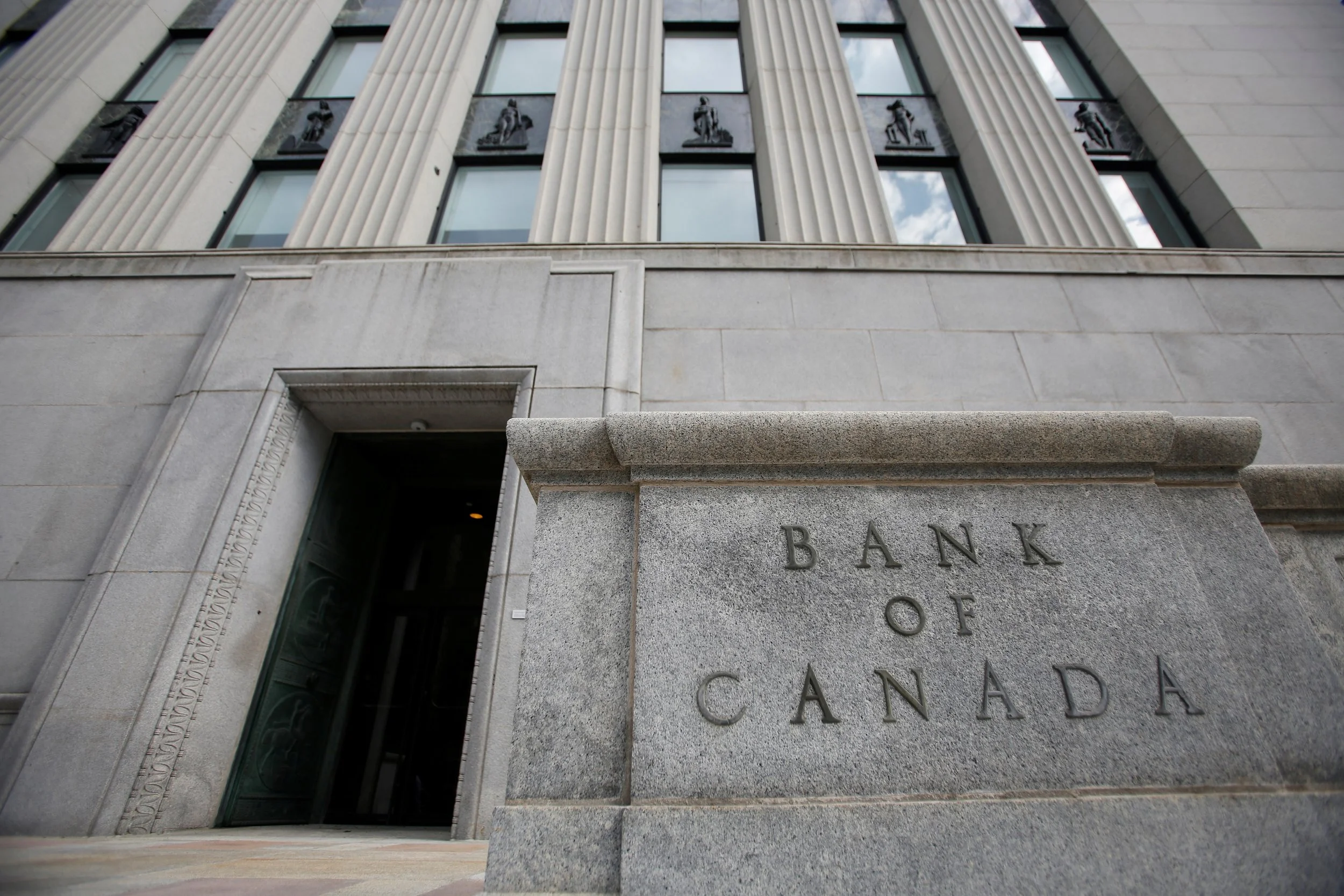
Central banking is ultimately about risk management. Raising rates further in a slowing economy risks unnecessary damage to employment, housing, and business investment. Cutting rates too early risks reigniting inflation and undermining credibility. When growth softens meaningfully but inflation remains only partially tamed, the safest position is often to pause.
A prolonged hold allows policymakers to observe how prior tightening continues to affect the economy without introducing new shocks. It also acknowledges that monetary policy cannot fine-tune outcomes in real time. For borrowers, this means the probability of additional rate hikes has diminished substantially, even if rate cuts remain a longer-term discussion rather than an immediate expectation.
The Disconnect Between Policy Rates and Mortgage Rates
One of the most persistent misconceptions among borrowers is the belief that a central bank pause should translate directly into lower mortgage rates. In reality, the relationship is far more complex. Variable rates are closely linked to policy decisions, so a hold reduces near-term volatility and stabilizes payments. Fixed rates, however, are driven primarily by bond markets, which respond to global economic conditions, inflation expectations, and investor sentiment—not just domestic policy announcements.
As a result, borrowers may find themselves in a rate environment that feels stagnant rather than improving. Rates may not rise, but they may not fall meaningfully either. This is often the most challenging environment psychologically, because it offers neither urgency nor relief—only the need for deliberate planning.
Mortgage Decisions in a Flat-Rate Environment Require a Different Lens
When rates are rising, decisions are defensive. When rates are falling, decisions are opportunistic. When rates are flat, decisions must be strategic. A prolonged hold shifts the focus away from timing and toward structure. Borrowers need to consider not just the interest rate, but the flexibility, penalty exposure, amortization strategy, and long-term cost of their mortgage.
This is especially relevant for borrowers approaching renewal. In a flat-rate environment, lenders compete more on features and pricing than during periods of volatility. Borrowers who prepare early, understand their options, and negotiate proactively often secure better outcomes than those waiting for a clear directional signal that may never arrive.

Refinancing During Economic Softening: More Than a Rate Play
For homeowners considering refinancing, the GDP slowdown reframes the conversation entirely. Refinances are no longer primarily about capturing lower rates. Instead, they become tools for improving cash flow, managing debt more efficiently, accessing liquidity, or repositioning balance sheets in anticipation of slower growth.
In economic slowdowns, flexibility becomes a form of insurance. Access to capital, lower fixed obligations, and the ability to adapt matter more than marginal rate differences. Borrowers who view refinancing through this broader lens are often better positioned to weather uncertainty and take advantage of opportunities when conditions eventually shift.
Lender Behavior Changes When Growth Slows
Economic conditions influence more than interest rates—they affect how lenders assess risk. As growth slows, underwriting standards, risk tolerance, and product availability can shift subtly. Some lenders become more conservative, while others compete aggressively for high-quality borrowers. These dynamics are rarely visible to consumers but have a meaningful impact on mortgage outcomes.
This is why lender selection becomes increasingly important in a holding environment. Borrowers who assume all lenders behave the same often miss opportunities to secure more favorable terms simply because they are working with institutions better aligned to current conditions.
How Level Up Mortgages Approaches This Phase of the Cycle
At Level Up Mortgages, we don’t view GDP data or central bank decisions as triggers for quick reactions. We see them as signals that help inform longer-term strategy. A prolonged hold from the Bank of Canada tells us the system is absorbing past tightening and that borrowers need solutions built for endurance, not short-term moves.
Our focus in this environment is on structuring mortgages that remain resilient if rates stay flat longer than expected, protect cash flow during slower growth, and preserve optionality for future adjustments. That means looking beyond the headline rate and designing financing that supports broader financial goals.
A Final Reflection for Borrowers
The Bank of Canada staying on hold is not a sign of uncertainty—it is a sign of restraint. It reflects an economy that is slowing but still functioning, and a policy framework that prioritizes balance over boldness. For borrowers, this is not a moment to wait passively or act impulsively. It is a moment to think clearly about how their mortgage fits into a changing economic landscape.
The most effective mortgage strategies right now are not driven by predictions about the next rate move. They are built on an understanding of how the economy is evolving and how financing decisions can either amplify or mitigate that reality.
Your mortgage should not depend on perfect timing.
It should be built to perform—regardless of whether the Bank of Canada moves next month or next year.
The Bottom Line
Canada’s slowing economy has significantly reduced the risk of further rate hikes, but it hasn’t created an environment for quick relief either. With the Bank of Canada likely to remain on hold, the smartest move for borrowers isn’t to wait for rates to change — it’s to structure a mortgage that performs well in a flat, uncertain environment. In this cycle, strategy, flexibility, and lender selection matter more than timing.
Level Up Mortgages is a mortgage broker team focused on helping the self employed, new immigrants, non-residents, and investors, access best rate and alternative lending in Canada. We have been nominated for best up and coming broker in Canada in 2021 and have been on CTV News and various publications because of our education-first approach to helping you always stay a step ahead of the process. Reach out to us for access to our first-time buyer course or a mortgage strategy session.
See What You Qualify For Or Contact Paul To Get Your Pre-Approval.
Paul Davidescu (www.levelupmortgages.com)
Level Up Mortgages
604-809-3188
paul@levelupmortgages.com
See Our Google Reviews in BC & Ontario: bit.ly/GoogleReviewLUM ⭐️⭐️⭐️⭐️⭐️