Why a Variable Mortgage Can Still Beat Fixed in Canada (Even If Rates Climb)
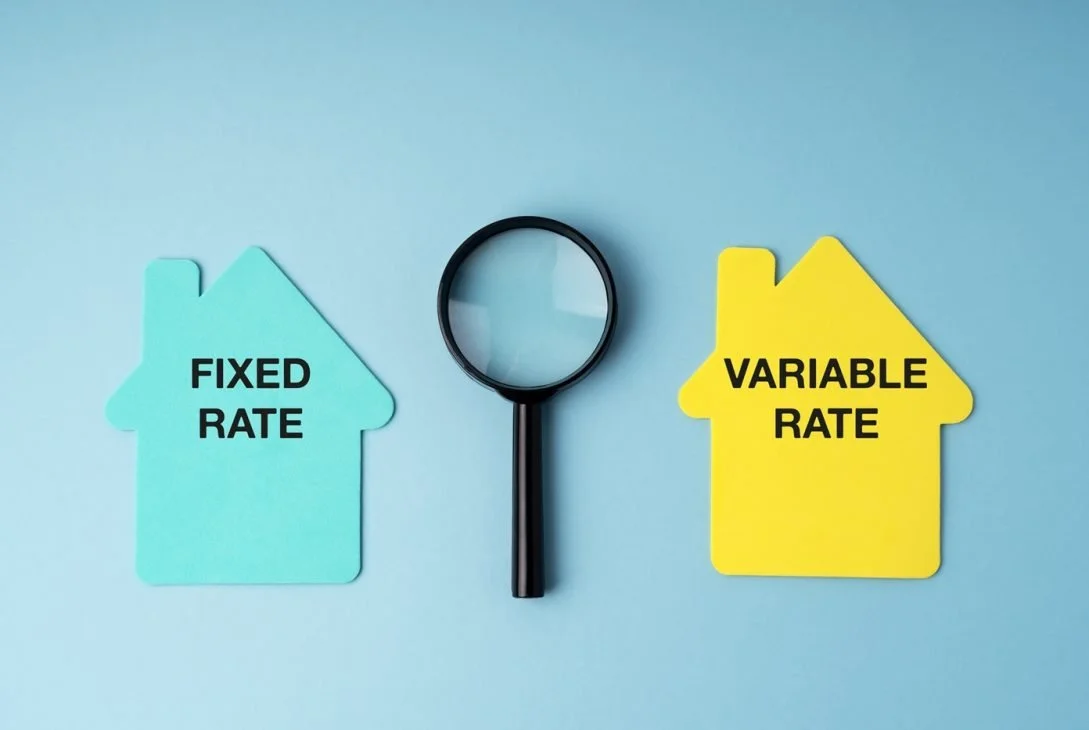
If you went through 2022 to 2024 on a variable mortgage, you remember the fear. Payments climbing. Friends locking in. Now as of November of 2026 you may be facing the same decision again, with the lowest variable at 3.60% and fixed at 4.20%, and you are probably leaning fixed for the certainty. Here is why that instinct, while understandable, is mathematically expensive.
The historical case: variable wins about 90% of the time
The longest-running study on this comes from Dr. Moshe Milevsky at York University, who tracked variable versus fixed mortgages in Canada from 1950 to 2007. He found that Canadians who chose variable came out ahead about 90% of the time, even through the brutal rate spikes of the 1980s. The edge has narrowed in more recent cycles, but variable still wins more often than not.
That data is not a guarantee for any single term. It is a base rate. And when the math behind your specific situation lines up with that base rate, ignoring it costs real money.
How variable and fixed actually move (and why fixed can fall while variable rises)
This is the part most people miss. Variable and fixed rates are not driven by the same engine. Variable rates follow the Bank of Canada's overnight rate, which sets the prime rate at the banks. Fixed rates follow Government of Canada bond yields, which trade based on the bond market's view of where inflation and growth are heading.
When the Bank of Canada hikes its rate, variable goes up immediately. But the bond market often reads those hikes as a signal that inflation is being tamed and growth will slow ahead. Bond yields drop. Fixed rates fall. In the same week your variable payment climbs, the fixed you could lock into may actually be lower than the one being offered today.
Fixed rates can rise too if bond yields climb, so this is not a guarantee. But the dynamic is the opposite of what most borrowers expect, and it gives variable a built-in escape hatch most people never realize they have. (How that works in more detail.)
The Disguised Variable Rate strategy
Here is the move that changes the math entirely. Instead of paying the lower variable payment and pocketing the difference, you voluntarily set your payment to whatever the fixed would have cost. You hide the variable inside a fixed-sized payment.
- You take the variable at 3.60%. Its default monthly payment on a $500,000 mortgage at 25-year amortization is $2,523.
- You set your payment to $2,684 instead, the exact same as the 4.20% fixed payment.
- That extra $161 a month goes straight to principal from day one, on top of the fact that 3.60% charges you less interest than 4.20% would.
- If your variable is a fixed-payment product (which most Canadian variable mortgages are), your $2,684 stays locked no matter what prime does. Your budget feels identical to the fixed.
- When rates rise, your payment does not move. More of the $2,684 quietly shifts to interest and less to principal, so you feel zero payment shock. And you can convert to a fixed at any time during the term with no penalty.
A worked example: Sarah's $500,000 mortgage
Meet Sarah. She is renewing into a three-year term and looking at the same decision you are: 3.60% variable or 4.20% fixed on a $500,000 mortgage with 25 years of amortization remaining. The fixed payment is $2,684 a month. The variable payment is $2,523 a month. Sarah is going to use the disguised variable strategy and pay $2,684 every month regardless of what the variable does.
For reference, if Sarah took the 4.20% fixed, she would pay $60,296 in interest over the three-year term. That is the number every scenario below is being compared against.
Scenario 1: rates rise 0.25% twice in year one, then hold at 4.10%
| Months in | Rate | Cumulative interest | Total Interest Relative to Fixed | Cumulative principal | Total Principal Paid Relative to Fixed |
|---|---|---|---|---|---|
| 6 months | 3.60% | $8,880 | $1,480 less | $7,225 | $1,480 more |
| 12 months | 3.85% | $18,238 | $2,361 less | $13,971 | $2,361 more |
| 18 months | 4.10% | $28,064 | $2,650 less | $20,249 | $2,650 more |
| 24 months | 4.10% | $37,762 | $2,942 less | $26,656 | $2,942 more |
| 30 months | 4.10% | $47,328 | $3,237 less | $33,194 | $3,237 more |
| 36 months | 4.10% | $56,760 | $3,536 less | $39,866 | $3,536 more |
Even at its peak, the variable (4.10%) sits below the fixed (4.20%) for the entire term. Sarah finishes $3,536 lighter on interest, with the same amount more knocked off her principal balance.
Scenario 2: rates climb to 4.35%, then tick up to a full point higher (4.60%) only in the final six months
| Months in | Rate | Cumulative interest | Total Interest Relative to Fixed | Cumulative principal | Total Principal Paid Relative to Fixed |
|---|---|---|---|---|---|
| 6 months | 3.60% | $8,880 | $1,480 less | $7,225 | $1,480 more |
| 12 months | 3.85% | $18,238 | $2,361 less | $13,971 | $2,361 more |
| 18 months | 4.10% | $28,064 | $2,650 less | $20,249 | $2,650 more |
| 24 months | 4.35% | $38,353 | $2,351 less | $26,064 | $2,351 more |
| 30 months | 4.35% | $48,516 | $2,049 less | $32,006 | $2,049 more |
| 36 months | 4.60% | $59,126 | $1,170 less | $37,500 | $1,170 more |
This is the harsh path. Rates climb a full point and end up nearly half a point above where the fixed sat the whole time. And Sarah still never falls behind the fixed at any point. Her advantage narrows in the back half of the term, but she finishes $1,170 ahead. That is the worst realistic case.
Scenario 3: rates fall 0.50%, with 0.25% cuts at the 18-month and 30-month marks
| Months in | Rate | Cumulative interest | Total Interest Relative to Fixed | Cumulative principal | Total Principal Paid Relative to Fixed |
|---|---|---|---|---|---|
| 6 months | 3.60% | $8,880 | $1,480 less | $7,225 | $1,480 more |
| 12 months | 3.60% | $17,630 | $2,969 less | $14,579 | $2,969 more |
| 18 months | 3.60% | $26,247 | $4,467 less | $22,066 | $4,467 more |
| 24 months | 3.35% | $34,141 | $6,563 less | $30,277 | $6,563 more |
| 30 months | 3.35% | $41,896 | $8,669 less | $38,626 | $8,669 more |
| 36 months | 3.10% | $48,944 | $11,352 less | $47,682 | $11,352 more |
In the scenario most people are not even pricing in, Sarah never falls behind the fixed for a single day, and finishes three years $11,352 lighter on interest with the same amount more of her balance paid off.
(How to read the last two columns: "Total Interest Relative to Fixed" is how much more or less interest the variable holder has paid than the fixed, where less is better. "Total Principal Paid Relative to Fixed" is how much more or less of the balance has been knocked down, where more is better. They are mirror images, because every dollar of interest saved lands on principal instead.)
One more angle: invest the difference instead
The strategy above puts that $161 a month into the mortgage, but you do not have to. The variable's required payment is $161 lower than the fixed, so it is cash flow you control. Invest it at an 8% annual return instead, and over three years it grows to roughly $6,526 (you contribute $5,796, the other $730 is growth). You could drop that on the mortgage as a lump sum at your next renewal, or keep it invested.
Honest caveat: mortgage paydown is a guaranteed return around 4%, while 8% carries market risk, so this is a real choice and not a free lunch. But it is a choice the fixed does not give you. The fixed forces the full $2,684 out of your pocket every month with no say. The variable hands you $161 of monthly optionality, which you can spend on principal, on investments, or on anything else that builds your wealth.
The bottom line
Sit with what the three scenarios actually show. In every single one of them, including the rate-climbing ones, the variable comes out ahead of the fixed by the end of three years. The range runs from a modest $1,170 better in the harshest climb to $11,352 better if rates fall, with the middling-rise case landing around $3,536 better. There is no scenario in this analysis where the fixed actually pulls ahead. That is because the starting spread (0.60%) is wide enough that a rate climb has to do a lot of work to overcome it.
The fear of variable is real, but it is a fear of payment shock, not a fear of math. With the disguised variable strategy on a fixed-payment variable product, your payment never moves regardless of where the Bank of Canada goes. The history says you will likely beat the fixed. The structure says even if you do not, you will not be far behind. And you keep the option to convert to a fixed at any time during the term with no penalty.
If you would like to run these numbers against your own mortgage, your own rates, and your own cash flow, book a free 15-minute strategy call. We will walk through your specific scenarios side by side and find the version of this strategy that fits your situation.
See What You Qualify For Or Contact Paul To Get Your Pre-Approval.
Paul Davidescu (www.levelupmortgages.com)
Level Up Mortgages
604-809-3188
See Our Google Reviews in BC & Ontario: bit.ly/GoogleReviewLUM ⭐️⭐️⭐️⭐️⭐️