Why markets are talking about a Bank of Canada hike by late 2026 and what that means for buyers and realtors heading into 2026
Why this matters before any rate actually changes
For most of the last two years, the Canadian housing conversation has leaned on a comforting script: rates went up fast, inflation started to cool, and the next chapter would naturally be “cuts, relief, and a rebound.” That storyline isn’t necessarily wrong, but it is no longer the only plausible path—and that matters, because real estate decisions are rarely driven by policy itself. They’re driven by expectations. The moment buyers stop believing rate relief is guaranteed, behaviour changes immediately: negotiations get tighter, patience increases, conditions return, and “monthly payment math” becomes the dominant decision driver. This is the real shift heading into 2026: not a guaranteed hike, but a return of uncertainty—and uncertainty always forces the market to become more disciplined.
What changed and why the “jobs surprise” moved expectations
The catalyst behind the narrative shift has been Canada’s labour market resilience. When employment prints stronger than expected and the unemployment rate falls, it signals that the economy is absorbing higher rates better than forecast. Central banks pay close attention to this because a strong labour market can keep wage growth elevated, and wage growth can keep services inflation sticky. Even when headline inflation looks calm, services inflation can remain stubborn if income growth and spending power stay strong. That’s why a single strong jobs report can move the entire interest-rate conversation: not because it tells the whole story, but because it changes the risk profile of the story—raising the odds that rates must stay restrictive longer, and lowering the odds of quick cuts that rescue affordability.
Why the narrative feels confusing, because the economy is giving mixed signals
Here’s why consumers and even professionals feel whiplash: Canada has also shown periods of choppy growth, and mixed macro signals create competing interpretations. Labour strength can point to economic resilience, while certain GDP or output indicators can still show weakness. That combination produces a “messy middle” environment where different groups can reasonably disagree: markets re-price probabilities rapidly, economists build base-case forecasts more slowly, and the central bank remains data-dependent because it cannot overreact to any one print. When the economy is sending mixed signals, what you get isn’t clarity—it’s volatility in expectations. And volatility in expectations is enough to change how buyers behave, even if the policy rate doesn’t move for months.
Markets vs economists: why two “truths” can exist at the same time
A key thing your audience needs to understand is that markets and economists do different jobs. Markets price probabilities in real time. They update instantly when new information changes the odds of future decisions. Economists typically present base-case paths with scenario ranges, often emphasizing what is most likely rather than what is possible. That’s why it’s common to see economists say “hold for longer,” while markets simultaneously price in a meaningful chance of a hike later. These statements can exist together without being contradictory. For realtors and buyers, the takeaway is not “who is right,” but “certainty has weakened,” and weakening certainty always makes the market more selective and more sensitive to affordability.
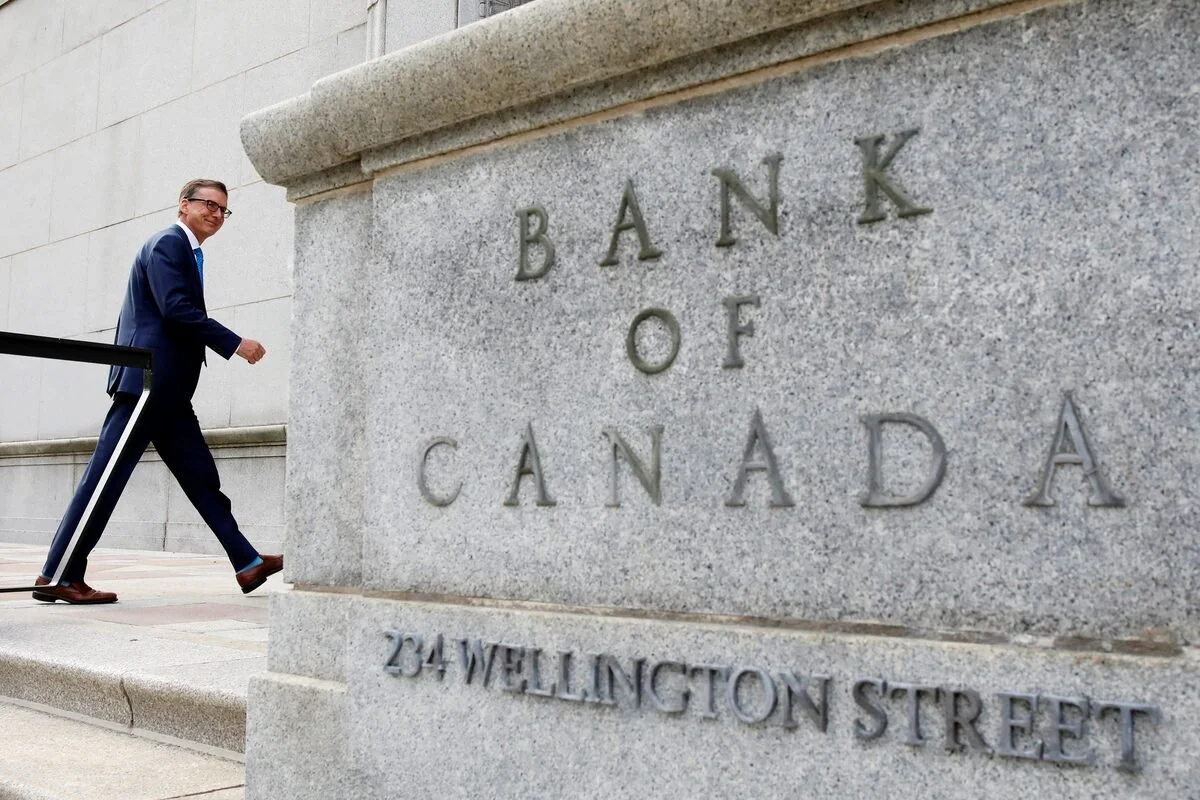
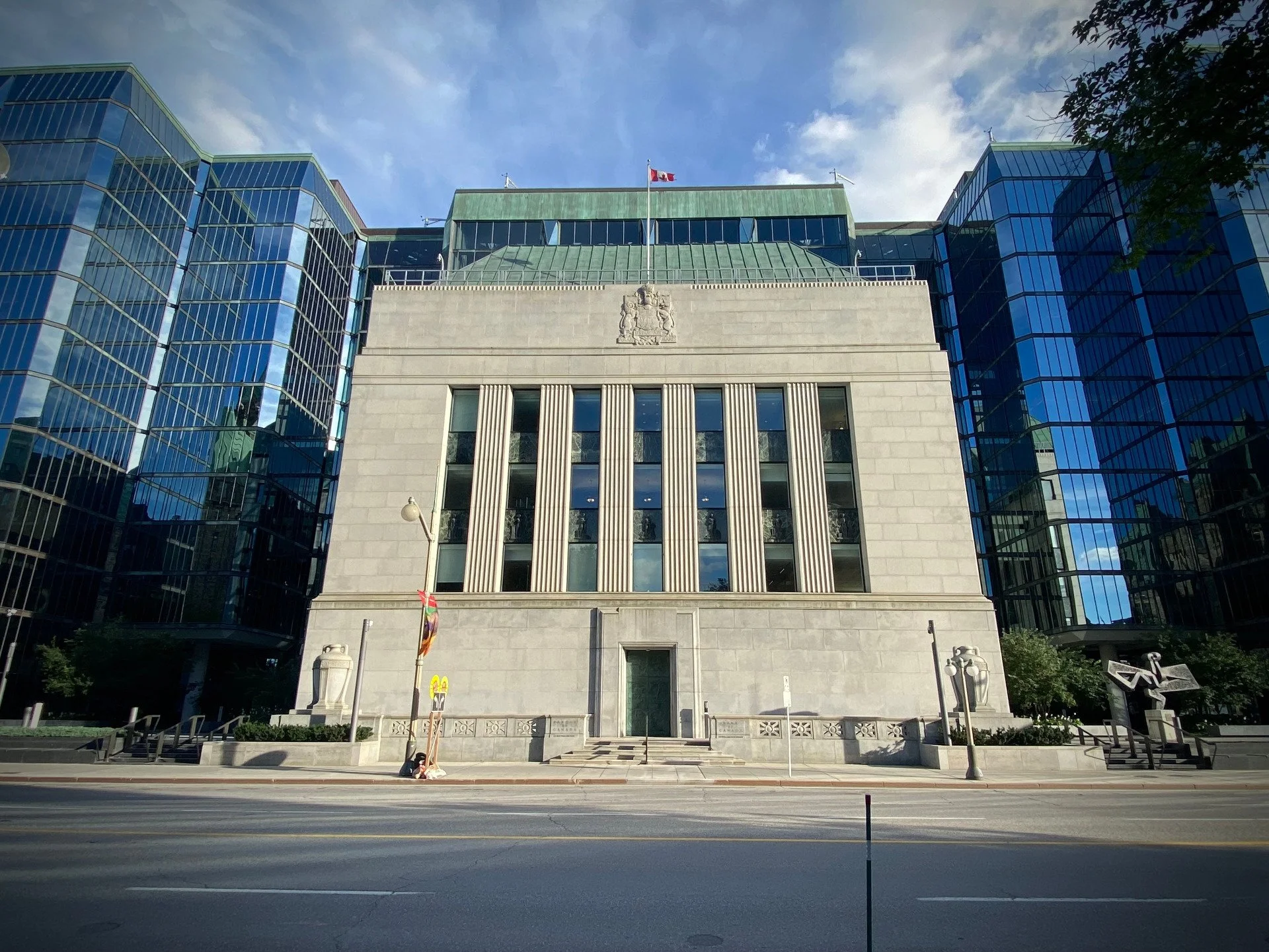
The Bank of Canada’s stance, when simplified, has looked like “hold and assess.” In other words: policy is restrictive enough to matter, inflation risks are still being monitored, and the path forward depends on incoming data. When central banks emphasize uncertainty or describe policy as “about right,” they are implicitly telling the market not to anchor too hard to a single outcome. The practical implication is that rate expectations can swing more than people expect, and fixed mortgage rates can move even when the overnight rate stays the same. That’s why a “rate hold” doesn’t always feel like a “mortgage hold” in the real world—and why this conversation matters for real estate planning, not just economic commentary.
The real 2026 storyline isn’t one rate decision it’s renewals and payment resets
If you zoom out, the biggest pressure shaping housing decisions into 2026 isn’t a dramatic hike or cut. It’s the cumulative impact of renewals and payment resets. Many households originated mortgages in a much lower-rate environment and are now approaching renewal terms that change the monthly cost of housing meaningfully. This impacts real estate behaviour in very specific ways: some homeowners choose to delay moves because the new payment math tightens their budget; others choose to sell or downsize because they want to restore cash flow; many buyers become more conservative because they’ve watched the renewal conversation unfold around them. That is why expectations matter: when people sense that rates might not fall much—or could rise later—stretching becomes harder to justify, and “buying something you can carry comfortably” becomes the dominant strategy.
Why this is a real estate conversation expectations reshape buyer psychology immediately
Even if rates stay unchanged for months, expectations alone move the market. When buyers believe cuts are guaranteed, they wait for the perfect time and often over-focus on the next announcement. When buyers believe rates could stay higher for longer—or that hikes are even possible later—two things happen simultaneously: discipline increases and quality thresholds rise. Buyers become more selective about layouts, building quality, resale fundamentals, and long-term livability. Negotiation becomes firmer. Conditional offers become more common. “Good properties” still move, but overpriced listings get punished quickly. That’s why the market feels like it has multiple speeds: the best product sells, the average product sits, and the weak product becomes price-sensitive.
Stop predicting, start building control
This is where Level Up approaches the conversation differently. We’re not here to sell forecasts. We’re here to build plans that work when forecasts are wrong. The question isn’t “Will rates fall?” The better question is “What happens if they don’t?” Buyers who build optionality into their plan—cash buffers, realistic payment comfort, flexibility in the mortgage product, and a property choice they’ll still love if the market goes sideways—are the buyers who remain unboxed. They don’t require perfect timing to succeed. They don’t rely on appreciation to save a deal. They structure decisions so they can hold through volatility, adapt to life changes, and keep control.
A practical way to explain this is scenario planning. Instead of building a purchase around one payment number, you test a few realities: today’s payment, a slightly tighter payment, and a renewal scenario that is not best-case. Not because you’re predicting disaster, but because you’re checking resilience. If your plan breaks the moment reality is slightly less friendly, the issue isn’t the market—it’s structure.
What this means for realtors your edge in 2026 is translation and positioning
In uncertain markets, clients don’t need cheerleaders. They need translators. The realtors who win in 2026 will be the ones who can take macro noise and turn it into micro clarity: what this means for monthly payment decisions, what it means for negotiation leverage, what it means for pricing strategy, and what it means for deal structure. Instead of promising “rates will drop,” the strongest advisors will say, “Here’s how we make a decision that still works if rates stay where they are—and still works if the market surprises.” Instead of pricing off 2022 psychology, they’ll price to today’s confidence and today’s affordability math. Instead of treating financing as a formality, they’ll treat it as part of the narrative that reduces buyer hesitation and increases certainty at the offer stage.
This is how deals get done in slow markets: not through hype, but through clarity and preparation.
Markets pricing a meaningful probability of hikes later doesn’t mean a hike is coming tomorrow. It means the easy “cuts are guaranteed” story is no longer a safe foundation for major life decisions. The Bank of Canada is in a hold-and-assess posture, the economy is sending mixed signals, and renewals will continue to reshape buyer and seller behaviour. In that environment, Level Up doesn’t teach prediction. We teach planning—because certainty is fragile, but optionality compounds. The clients who build control into their housing decisions are the ones who look back in five years and say, “That was the moment we stopped guessing, and started playing the long game.”
BOTTOM LINE
Markets aren’t guaranteeing a Bank of Canada hike by late 2026—but they are telling us uncertainty is back, and that alone changes buyer behavior. With a resilient labour market, mixed growth signals, and a massive renewal wave ahead, 2026 will reward the clients (and realtors) who stop chasing predictions and start building resilient plans: buy within a payment you can carry, structure for flexibility, and focus on quality and long-term hold power instead of hoping the next headline saves the deal.
Level Up Mortgages is a mortgage broker team focused on helping the self employed, new immigrants, non-residents, and investors, access best rate and alternative lending in Canada. We have been nominated for best up and coming broker in Canada in 2021 and have been on CTV News and various publications because of our education-first approach to helping you always stay a step ahead of the process. Reach out to us for access to our first-time buyer course or a mortgage strategy session.
See What You Qualify For Or Contact Paul To Get Your Pre-Approval.
Paul Davidescu (www.levelupmortgages.com)
Level Up Mortgages
604-809-3188
paul(at)levelupmortgages.com
See Our Google Reviews in BC & Ontario: bit.ly/GoogleReviewLUM ⭐️⭐️⭐️⭐️⭐️